How to Choose the Right Strapping Tensioner?
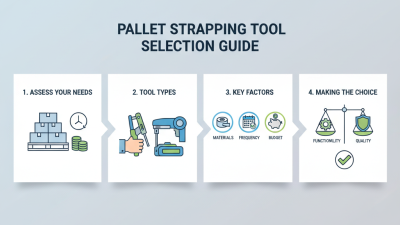
Choosing the right Strapping Tensioner is not simply a matter of selecting the strongest tool. The correct choice depends on strap material, package shape, required tension, working conditions, and operator experience. A narrow steel strap around a rigid steel coil needs different control than polypropylene strap around cartons.
Walter Soroka, a respected packaging engineer and author, describes packaging as “the science, art, and technology of enclosing and protecting products.” His principle applies directly here. A tensioner must protect the load without crushing edges, bending cartons, or loosening during transport.
Start with the strap. Steel usually requires higher tension and a durable tensioning mechanism. PET and polypropylene demand smoother control, because excessive force can stretch or damage them. Check the strap width and thickness carefully. Small differences matter.
Then examine the package itself. Is the surface flat, curved, fragile, or uneven? A manual Strapping Tensioner may suit occasional warehouse work. A pneumatic or battery-powered model may be better for frequent applications and consistent output.
Consistency matters most.
Look for adjustable tension, ergonomic handles, replacement parts, and clear maintenance instructions. Test the tool on a real package, not only on a workbench. In practice, a tool that feels powerful may still create unstable seals or uneven tension.
The first choice is not always the best choice. Operators may overlook fatigue, cold temperatures, or limited access around the load. Those details deserve honest review. Measure strap performance after handling, inspect corner protection, and record failed bundles. A reliable Strapping Tensioner should improve safety, repeatability, and productivity without making the process unnecessarily complicated.
Define Load, Strap, and Required Tension Under EN 12195-2
How to Choose the Right Strapping Tensioner?
Under EN 12195-2, selection begins with the load, not the tensioner. Record the cargo mass, dimensions, centre of gravity, and contact surface. A smooth steel pallet behaves differently from a rough wooden floor. Check whether the load may slide, tip, or both. Then define the strap type, width, material, lashing capacity, and permitted elongation. The required tension depends on friction, acceleration forces, lashing direction, and strap angle. A high-capacity strap does not automatically provide enough securing force. The tensioner must create the required standard tension force, often marked as STF, without damaging the strap.
Tips:
Keep the strap close to the load. Avoid sharp edges, twisted webbing, and uneven contact. Confirm the tensioner’s rated STF matches the strap label. Measure actual tension when possible. Hand feel is useful, but not reliable.
In practical work, I inspect the strap path before choosing the tool. A narrow gap may require a compact handle. Frequent securing may justify a lighter tensioner, while heavy cargo demands stronger components and better control. Never assume maximum handle force equals correct strap tension. Follow the complete lashing calculation and the manufacturer’s operating instructions.
A common mistake is selecting a tensioner by strap width alone. That shortcut can overlook the lashing angle or friction value. Recheck the calculation when cargo, surface, or weather conditions change. Even an experienced operator can miss one detail.
Match Tensioner Capacity to 13–32 mm Strap Widths
How to Choose the Right Strapping Tensioner?
Strap width is the first practical filter.
A 13–16 mm strap usually suits lighter cartons and bundled products. A 19–25 mm strap supports heavier loads and longer transport routes. A 32 mm strap needs a tensioner with greater capacity and stronger frame stability. Width alone is not enough. Compare the tool’s rated tension with the strap’s certified breaking strength and required safety margin.
ASTM D3950 provides a useful reference for plastic strapping performance and testing. It reminds buyers to evaluate tensile strength, elongation, and joint efficiency together. The 2024 MHI Annual Industry Report found that 55% of supply-chain leaders planned to increase technology investment. That trend includes safer, more measurable packaging tools. A tensioner with a calibrated force setting can reduce guesswork. It also helps operators avoid crushing cartons or overstretching narrow straps.
Check the working range carefully.
A tool designed for 13–19 mm strap may not grip 32 mm strap securely. For 19–25 mm applications, inspect jaw width, feed alignment, and replacement-part availability. For 32 mm strap, test the tool on a loaded pallet, not an empty sample. I have seen specifications look suitable on paper, yet the handle flexed during real use. That detail is easy to miss. Record actual tension, strap material, and package damage during trials. Recheck the choice after humidity or temperature changes, because polymer straps can behave differently.
Compare Manual, Pneumatic, and Battery Tools up to 6,000 N
How to Choose the Right Strapping Tensioner?
Strapping tensioners can reach 6,000 N, but maximum force is not always the best choice. Manual tools suit low-volume packing, repairs, and changing workstations. They cost less and require no air line or battery charging. However, repeated squeezing can increase operator fatigue. The NIOSH Revised Lifting Equation uses 23 kg as its recommended load constant under ideal conditions. This reminds us that ergonomic limits deserve attention during every shift.
Pneumatic tools deliver fast, consistent tension for high-volume steel or plastic strapping. They need regulated compressed air, routine filter maintenance, and stable hose routing. Battery tools offer better mobility and quick setup across a warehouse. Modern units can provide controlled tension without compressors, although battery temperature and charging discipline affect performance. The 2023 PMMI packaging trends report highlights labor availability and automation as continuing operational concerns. Consistent tension can reduce adjustment time, but it cannot correct poor strap placement or damaged packaging. That part is often overlooked.
Tips: Match the tool to strap material, width, and package strength. Verify force with a calibrated tension gauge, not hand feel. ASTM D3950 provides useful guidance for plastic strapping selection and testing. Start below 6,000 N, then increase gradually after observing corner crushing, strap stretch, and load stability. A neat calculation still misses real warehouse conditions. Trial the tool on a full shift before purchasing.
Verify Strap Joints Against ASTM D3950 and ISO 21898
How to Choose the Right Strapping Tensioner?
Verify Strap Joints Against ASTM D3950 and ISO 21898
A tensioner is not chosen by pulling force alone. Strap width, material, surface friction, and joint design also control performance. ASTM D3950 covers nonmetallic strapping and its joining methods. Its requirements vary by strap type and application. Therefore, check the correct specification table before setting tension. A joint may look smooth and still fail under vibration.
Test cut samples from actual production. Apply the planned tension, then measure joint strength and slippage. Record temperature, strap batch, seal type, and tool setting. These details expose problems that visual checks miss. They also support repeatable quality records. The MHI 2024 Annual Industry Report found that 83% of supply chain professionals view technology as a competitive advantage. Consistent tension settings can reduce operator variation, but automation cannot repair a weak joint.
For flexible intermediate bulk containers, ISO 21898 should also be reviewed when straps or lifting elements carry the load. It is not a replacement for ASTM D3950 joint verification. Confirm that the complete FIBC design matches its intended, non-dangerous goods application. Test filled containers, not only empty samples. That point is often overlooked. A practical weakness remains: laboratory results may not represent dusty, humid, or uneven warehouse conditions. Retesting after storage and transport simulation is the safer choice.
Assess Safety Features, Ergonomics, and Tension Accuracy
How to Choose the Right Strapping Tensioner?
A reliable strapping tensioner should protect the operator before it maximizes pulling force. Look for a guarded moving mechanism, a clear emergency release, and stable operation during jams. An overload warning is useful, but it should not replace regular inspection. Check the power cable, battery housing, trigger, and strap path before each shift. Small cracks can become serious failures under tension.
Ergonomics matters during repetitive packaging work. Hold the tool for several minutes, if possible. Notice its weight, balance, handle shape, and trigger resistance. A comfortable grip reduces wrist strain and awkward shoulder movement. The tool should fit gloved hands without slipping. I once chose a compact model that felt efficient at first. After two hours, its narrow handle caused noticeable hand fatigue. That shortcut was a mistake.
Tension accuracy affects load stability and package damage. Choose a tool with adjustable tension and readable settings, then test it with the strap material used in daily work. Different strap widths and temperatures can change the result. A calibrated tension gauge provides stronger evidence than a dial position alone. Record test readings and inspect sealed packages for loose straps, crushed edges, or deformation. Follow the operating manual and your workplace risk assessment. Real conditions are often less tidy than the showroom.
How to Choose the Right Strapping Tensioner?
Safety features receive the highest priority because effective guarding, controlled release, and secure strap handling help reduce operational risk. Ergonomics supports consistent use and lowers operator fatigue, while tension accuracy helps maintain reliable load stability. The percentages represent a practical evaluation framework and should be adjusted according to the application, strap material, package weight, and workplace conditions.