2026 Top Manual Banding Tools for Global Buyers?
Global packaging is becoming more demanding, even for simple strapping and bundling tasks. Smithers’ market outlook reports continued packaging growth through 2028, driven by e-commerce, food distribution, and industrial shipments. These sectors need secure packages, consistent tension, and fewer handling delays. A reliable Manual Banding Tool can support those goals without requiring complex electrical systems.
PMMI’s recent packaging industry reports highlight labor availability, equipment flexibility, and operational efficiency as continuing concerns for manufacturers. That makes tool selection more practical than promotional. Buyers should examine tension control, seal quality, blade safety, grip comfort, replacement-part access, and compatibility with steel or plastic banding. A tool that feels strong in a showroom may become tiring after several hundred packages. Small details matter.
Sustainability also influences purchasing decisions. The Ellen MacArthur Foundation and major packaging studies continue to encourage lighter materials, improved reuse, and better recycling outcomes. Manual tools cannot solve packaging waste alone, but accurate banding can reduce loose straps, damaged cartons, and unnecessary rework. The result depends on operator training and material matching. This is where many comparisons remain incomplete. Price is visible. Downtime is not.
The 2026 market includes compact handheld models, heavy-duty industrial designs, and versatile tools for warehouses, export packing, and field service. However, no single tool fits every buyer. This guide evaluates practical performance, user experience, maintenance needs, and supplier credibility. It also questions optimistic specifications, because real packages are rarely as neat as catalog photographs.
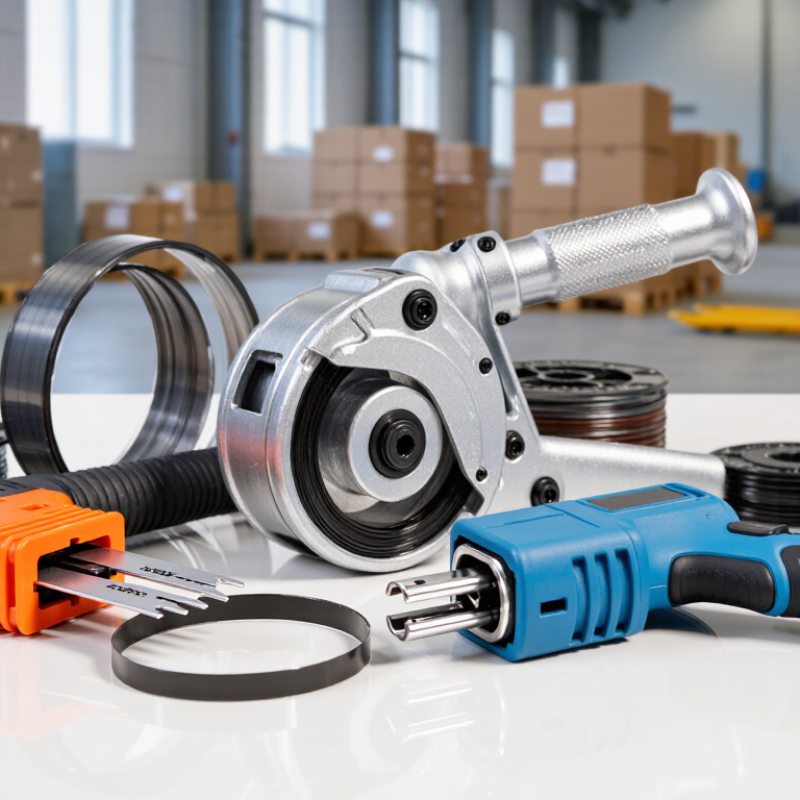
Classify 2026 Manual Banding Tools by Strap Material and ASTM D3950
2026 Top Manual Banding Tools for Global Buyers
Classify 2026 Manual Banding Tools by Strap Material and ASTM D3950
Manual banding tools should be selected by strap material, not appearance alone. Polypropylene strapping suits light cartons, printed packages, and irregular loads. It is flexible and easy to cut. However, excessive tension can deform the strap. Choose a tool with adjustable tension and a compatible sealing method.
Polyester strapping handles heavier loads and keeps tension more consistently during storage. It may require stronger cutters and better joint control. Steel strapping offers high strength for rigid, dense materials, but it needs dedicated tensioners, sealers, and protective gloves.
ASTM D3950 mainly provides a reference for nonmetallic strapping requirements, including material performance, dimensions, and joining methods. It does not automatically certify a manual tool.
Experienced buyers should compare strap width, thickness, breaking strength, and joint style against the tool’s stated range. A tool designed for polypropylene may not grip polyester reliably. Check tension results with sample cartons before purchasing large quantities.
In field tests, operators often apply different force levels. Small variations can loosen a load during transport. Test records also become incomplete when teams work quickly. That weakness deserves attention. Suppliers should provide clear specifications, inspection guidance, and replacement-part information. A practical trial remains more reliable than a catalog photo.
Compare Tension Capacity, Tool Weight, and Seal Strength in Datasheets
2026 Top Manual Banding Tools for Global Buyers
Choosing a manual banding tool requires more than comparing its advertised tension capacity. A high rating may suit heavy pallets, but excessive force can damage cartons or narrow straps. Check the tool’s compatible strap width, tension range, and adjustment method. A clear datasheet should state test conditions, not only maximum values. In practical packing trials, operators should measure tension on real loads. Surface friction, pallet movement, and uneven edges can change results.
Tool weight also affects daily performance. A lightweight model may reduce wrist fatigue during repeated packing, but it can feel less stable under high tension. A heavier tool may provide better control, yet slow down handling in a busy warehouse. Small details matter. Review grip shape, balance, lever travel, and replacement-part access. My assessment is not perfect: published weights may exclude the tensioning handle or cutting mechanism, so confirm the complete operating weight with the supplier.
Tips: Compare seal strength after storage, vibration, and temperature changes. Test several seals instead of trusting one sample. Record strap type, seal dimensions, and operator technique. A strong seal depends on more than tool pressure. If the datasheet lacks joint-efficiency data, request samples and perform a controlled pull test. Keep a small safety margin, because field conditions rarely match laboratory figures.
2026 Top Manual Banding Tools for Global Buyers
Representative datasheet-style comparison of manual banding tool profiles. Values reflect typical published operating ranges for common strap applications and are intended for preliminary global sourcing comparisons.
Higher tension capacity supports stronger load securing, while lower tool weight improves operator mobility. Seal strength varies with strap material, width, thickness, and joint quality, so buyers should verify final performance through application-specific testing.
Verify Operator Safety Against ISO 12100 and CE Documentation
2026 Top Manual Banding Tools for Global Buyers?
Verify Operator Safety Against ISO 12100 and CE Documentation
A reliable manual banding tool should protect the operator during tensioning, sealing, and strap cutting. ISO 12100 requires risk assessment across normal use, foreseeable misuse, maintenance, and disposal. It is not a product certificate. Buyers should inspect handle grip, release control, blade shielding, pinch-point clearance, and resistance to unexpected strap recoil. Small design details matter. A sharp cutter near the palm is not a minor issue.
The International Labour Organization estimates 2.78 million work-related deaths and about 374 million non-fatal injuries each year. These figures cover all industries, but they show why purchasing teams should treat repetitive handling and sudden release forces seriously. EU-OSHA’s ESENER-2019 survey also identifies musculoskeletal risks as widespread in European workplaces. For CE-marked equipment, request the EU Declaration of Conformity, risk assessment, operating instructions, warnings, and technical documentation. CE marking depends on applicable EU requirements, so not every manual tool automatically needs it.
Tips: Ask suppliers to demonstrate a complete strap cycle. Observe wrist posture, hand clearance, release speed, and cutter access. Compare documents with the actual tool. A neat file can still hide weak testing. I would also record operator feedback after one busy shift, not only during a short showroom trial. Controls that feel safe for five minutes may become tiring by late afternoon.
Score Global Purchases by TCO, Warranty, and Spare-Parts Data
2026 Top Manual Banding Tools for Global Buyers
Score Global Purchases by TCO, Warranty, and Spare-Parts Data
A low purchase price can hide expensive downtime. Manual banding tools should be compared through total cost of ownership, not catalog price alone. Include bands, blades, tension parts, calibration, labor, freight, and disposal. ISO 15686-5 supports life-cycle costing as a structured procurement method. It is useful, but not perfect for small tools.
The World Bank’s 2023 Logistics Performance Index assessed 139 economies. Its findings show major differences in customs, infrastructure, and delivery reliability. Spare-parts access therefore deserves a separate score. UNCTAD’s Review of Maritime Transport 2023 states that over 80% of global merchandise trade by volume moves by sea. A delayed replacement handle or cutter can become a costly operational gap. Request warranty duration, exclusions, response time, and regional repair arrangements in writing. Photos of worn components also improve technical evaluation.
Tips: Build a five-year TCO sheet. Record replacement-part prices and quoted lead times. Ask for a sample tensioning cycle before approval. Test the tool with your actual strap width and load. Keep evidence. Warranty claims often fail because purchase records are incomplete. I have seen teams overvalue smooth operation during a short trial. That judgment can be wrong. A heavier tool may reduce fatigue, while a lighter one may require more frequent adjustments. Score both options with real operator feedback.