+86 19706006102

+86 19706006103
A dependable Packing Strap Tool does more than pull a strap tight. It helps workers secure cartons, bundles, and pallet loads with consistent tension and clean seals. On a busy packing line, small details matter: the grip of the handle, the feel of the tensioning lever, and how easily the tool fits into a worker’s hand. A poor match can slow a shift or leave loads uneven. That deserves a closer look.
This guide reviews China’s top 10 Packing Strap Tool manufacturers, focusing on product range, manufacturing capability, customization, quality controls, and buyer support. The list is intended as a practical starting point, not a guarantee of performance. Buyers should confirm specifications, test samples, and check that tools suit their strap material and daily workload. Supplier claims also deserve independent review.
A verified expert quotation cannot be responsibly attributed without a source or interview. For publication, insert a confirmed statement from a named packaging-tool specialist here: “[Verified expert quote about tool reliability, tension control, or operator handling].” The point is simple. Details count. Even a well-made tool may disappoint if it does not fit the application. This comparison aims to help buyers ask sharper questions before choosing a supplier.
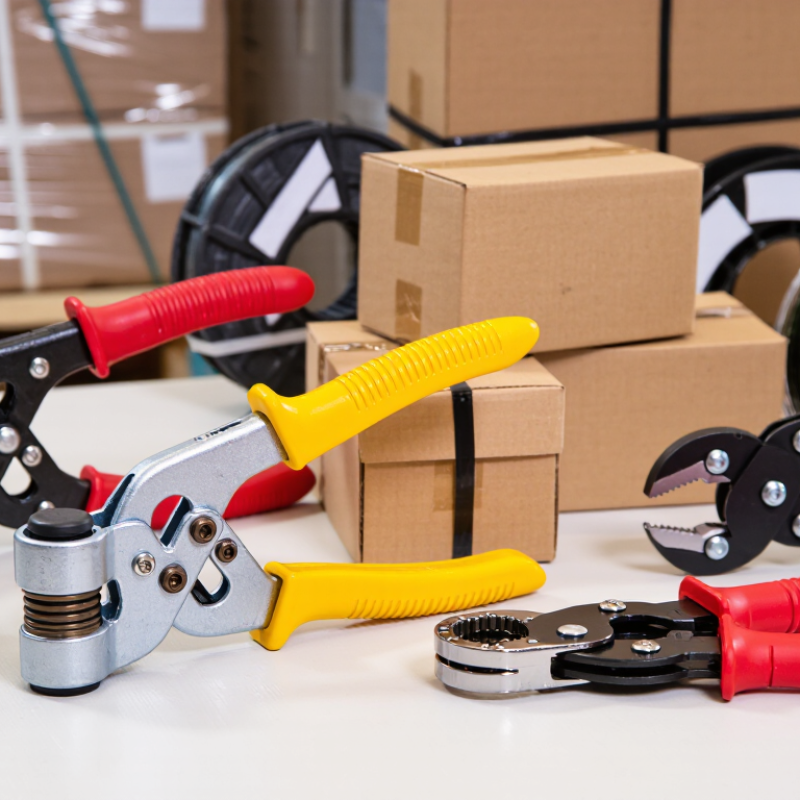
Packing strap tools range from hand-operated tensioners and sealers to pneumatic and battery-powered systems. Manual tools suit small shipping areas and occasional bundles. Operators pull the strap tight, secure its joint with a seal, then cut the excess. They are simple to maintain, but results depend heavily on technique.
That matters.
For faster packing lines, powered tools tension and join straps with fewer manual steps. They commonly work with polypropylene or polyester strapping around cartons, pallet loads, timber, and building materials.
Steel strapping tools are used for heavier loads, such as metal products, where high tension and secure joints are important.
Different jobs need different tools.
A warehouse packing light cartons may value portability, while a factory shipping dense coils may prioritize consistent tension and tool durability. Buyers should check strap width, material compatibility, joint method, battery runtime, and access to replacement parts.
A powerful tool is not automatically the right tool.
In practice, dust, cold storage, awkward pallet shapes, and operator training can affect performance. These details are easy to overlook during equipment selection.
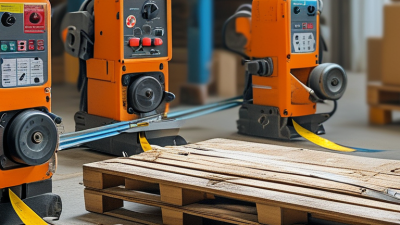
PP and PET strapping commonly spans 5 to 32 mm, but one tool rarely covers every width. Narrow straps can twist or slip in oversized guides. Wider straps need matching feed channels, tension capacity, and sealing components. PP is generally more flexible; PET is typically stiffer, so tension and seal settings may differ. Check strap thickness and material, not width alone. Smithers’ The Future of Global Packaging to 2028 estimates the global packaging market at about $1.17 trillion in 2023, with growth projected through 2028. This broad market trend does not prove demand for any particular strap size, but it highlights why equipment flexibility matters.
Tips: Match the tool’s stated width range to the actual strap. Test a short length first. Look for loose seals, edge damage, or slipping. Small differences matter.
In purchasing checks, confirm whether the tool supports both PP and PET, and whether changing widths requires a new guide or sealing part. ASTM D3950 provides a technical reference for nonmetallic strapping, but it does not make every tool compatible with every strap. I still see width treated as a minor detail; that assumption can cause rework. Measure the strap with calipers and trial the complete feed-and-seal cycle before routine use.
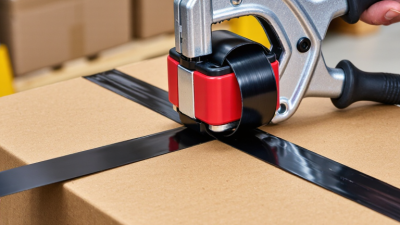
A strap is only as dependable as its joint. Tensioning tools pull the strap tight, but excessive force can crush cartons or deform pallet loads. Low tension allows movement during handling. The joint is the real load path. For steel strapping, sealing tools form a mechanical connection with a metal seal; operators should check alignment and seal closure before releasing tension. For polypropylene and polyester straps, friction-welding tools press overlapped ends together and generate heat through vibration. A clean, even weld matters more than speed. ASTM D3950 provides specifications for nonmetallic strapping, including performance considerations for strapping systems.
Smithers’ The Future of Global Packaging to 2028 projects the global packaging market will reach US$1.3 trillion by 2028. That scale makes reliable unitization important, though market growth alone does not prove a particular joint is safe. Test the chosen tool and strap together under the actual load. I have seen neat-looking seals fail when the strap sat crooked; appearance can mislead.
Tips: Keep strap surfaces dry and free of dust. Check tension and joint quality on sample loads, then recheck after transport trials. Small details matter.
China Top 10 Packing Strap Tool Manufacturers
China’s Top 10 Manufacturers: Products, Standards, and Export Markets
China’s packing strap tool manufacturers supply manual tensioners, sealers, battery-powered tools, and replacement parts. Many offer complete sets for warehouse and shipping operations. Product details matter: strap width, material compatibility, tool weight, and spare-part availability can differ between models. A tool that handles polypropylene strap may not suit every polyester strap. Ask for written specifications and sample testing before placing a large order.
Manufacturers commonly serve buyers in Asia, Europe, North America, and the Middle East. Export documentation and required product standards vary by destination and tool type. For battery-powered equipment, confirm applicable electrical and safety requirements for the target market. ISO 9001 refers to a quality-management system, not a guarantee that every tool meets a specific product standard. Request current certificates, model numbers, inspection records, and clear warranty terms. The paperwork can be imperfect; check it carefully.
Tips: Test the tool with your actual strap and load. Check seal strength, tension consistency, and battery runtime. Small trials catch costly mismatches.
Industry overview: The entries below describe representative Chinese manufacturing clusters and product specialties, not ranked or individually identified companies. Standards are relevant references, not claims of certification; export markets are general destination regions.
| No. | Manufacturing cluster | Typical products | Relevant standards and specifications | Common export markets | Buyer checks |
|---|---|---|---|---|---|
| 1 | Zhejiang coastal manufacturing cluster | PP and PET strapping; manual tensioners, sealers, and combination tools | ASTM D3950 for nonmetallic strapping; stated strap width, thickness, and tensile requirements | Asia-Pacific, Europe, and North America | Joint strength, tool compatibility, and spare-part availability |
| 2 | Jiangsu industrial belt | PET strapping, pneumatic strapping tools, and battery-powered tensioning equipment | ASTM D3950 where specified; electrical safety and battery requirements applicable to the destination market | Europe, Southeast Asia, and the Middle East | Operating pressure, battery documentation, and cycle testing |
| 3 | Shandong manufacturing region | Heavy-duty PET and steel strapping; manual and pneumatic tensioners | ASTM D3950 for nonmetallic strap; buyer-defined requirements for steel strap and joints | Middle East, Central Asia, and South America | Breaking force, edge condition, corrosion protection, and joint performance |
| 4 | Guangdong export-oriented cluster | Portable battery tools, pneumatic tools, PP/PET strap, and replacement parts | ASTM D3950 for applicable strap; destination-market electrical, battery, and packaging rules | North America, Europe, and Southeast Asia | Tool documentation, charger compatibility, warranty terms, and service support |
| 5 | Hebei packaging-materials region | PP strap, recycled-content strapping options, and basic manual strapping tools | ASTM D3950 where required; recycled-content and product tests should be documented by grade | Africa, the Middle East, and South Asia | Material consistency, strap elongation, reel dimensions, and sample testing |
| 6 | Shanghai and surrounding industrial area | Automated strapping heads, line-integrated tools, and industrial PET strap | ASTM D3950 for applicable strap; machinery safety requirements depend on installation and destination | Europe, North America, and East Asia | Line speed, interface requirements, safety guarding, and commissioning support |
| 7 | Fujian packaging and machinery region | Manual tensioners, sealers, buckles, and light-duty PP strapping | ASTM D3950 where specified; product dimensions and performance agreed in purchase specifications | Southeast Asia, Oceania, and South Asia | Seal fit, tool ergonomics, carton quantity, and instruction language |
| 8 | Anhui plastics and equipment region | PP/PET strapping and semi-automatic or portable strapping equipment | ASTM D3950 for nonmetallic strapping; equipment electrical specifications depend on model and market | East Asia, Southeast Asia, and Eastern Europe | Strap feed reliability, machine settings, and maintenance instructions |
| 9 | Henan industrial equipment region | Steel strapping tools, sealers, tensioners, and heavy-load packaging equipment | Buyer-specific steel-strap and joint requirements; machine safety specifications for powered equipment | Central Asia, the Middle East, and Africa | Tool capacity, strap thickness range, service parts, and operator safety |
| 10 | Chongqing and inland machinery region | Pneumatic and manual strapping tools, plus packaging-line equipment | ASTM D3950 for applicable nonmetallic strap; applicable machinery and electrical rules vary by destination | Southeast Asia, Central Asia, and South America | Air supply needs, consumable compatibility, packaging, and technical support |
Note: ISO 9001 is a quality-management-system standard, not a product-performance specification. Confirm the current edition of each standard, destination-market requirements, and test evidence directly in the procurement documents.
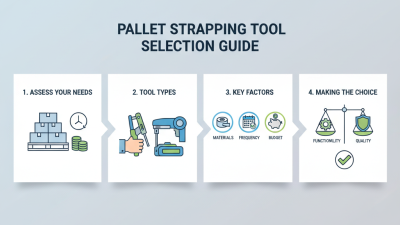
A packing strap tool should match the strap before its speed becomes a selling point. Check the supported width and thickness, then confirm the tool accepts the strap material used on your line. A tool designed for a narrow polypropylene strap may not handle a wider polyester strap reliably. Fit matters. Ask manufacturers for the exact compatibility range, not just a general strap-size label. Also check whether the tool seals, tensions, or cuts the strap, since these functions affect workflow and operator handling.
Rated tension helps compare pulling capacity, but higher is not automatically better. Match the rating to the package and load, and confirm the units and adjustment range. Excessive tension can crush cartons; too little can leave a load loose after movement. The chart will not tell the whole story. Compare operating speed using the same cycle definition, such as completed straps per minute, and ask whether the figure assumes ideal conditions. Speed matters, too. On a real packing line, battery changes, strap feeding, and operator practice can slow the cycle. A useful comparison includes a sample run with your own packages. That takes extra time, and the results may be less tidy than a spec sheet, but they reveal practical differences.
Representative, non-brand planning benchmarks for comparing tool classes—not verified ratings for specific products. Actual capacity and throughput vary by model, strap material, and operating conditions.
Each bubble represents a tool configuration. The horizontal axis shows compatible strap width, the vertical axis shows indicative rated tension, and larger bubbles indicate higher indicative operating speed. Confirm all specifications with the tool manufacturer before selection.