+86 19706006102

+86 19706006103
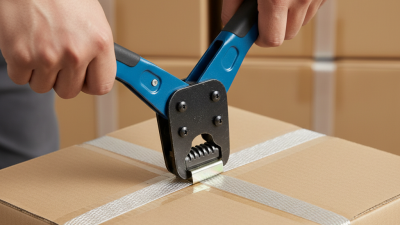
Choosing a Plastic Banding Tool in 2026 requires more than comparing prices or motor ratings. The right choice depends on material, package geometry, tension requirements, and daily operating volume. A tool used on cartons of printed products may need controlled tension and clean welds. A warehouse securing heavy tile bundles needs stronger battery performance and dependable sealing. Small differences become expensive quickly.
Industry research supports this practical approach. PMMI’s 2024 packaging machinery research identifies labor availability, automation, and equipment flexibility as continuing priorities for packaging operations. Smithers’ “The Future of Global Packaging to 2028” also highlights ongoing changes in packaging formats, sustainability expectations, and production efficiency. These findings suggest that buyers should evaluate the complete workflow, not just the tool itself. Battery charging time, strap compatibility, maintenance access, operator training, and replacement parts all affect real productivity.
Look beyond headline specifications.
A reliable Plastic Banding Tool should match polypropylene or polyester strap requirements, package dimensions, and the operator’s working environment. Check tension consistency, seal strength, tool weight, vibration, and safety controls through realistic trials. Ask suppliers for documented performance data, warranty terms, and service records. Certifications should be verified rather than assumed.
The imperfect part is often overlooked. A powerful tool can still fail when operators use the wrong strap, poor alignment, or excessive tension. My recommendation may change after observing actual packaging conditions. That is why a short production trial matters. In 2026, the best purchase is not necessarily the fastest or cheapest model. It is the tool that performs predictably, safely, and economically across ordinary working days.
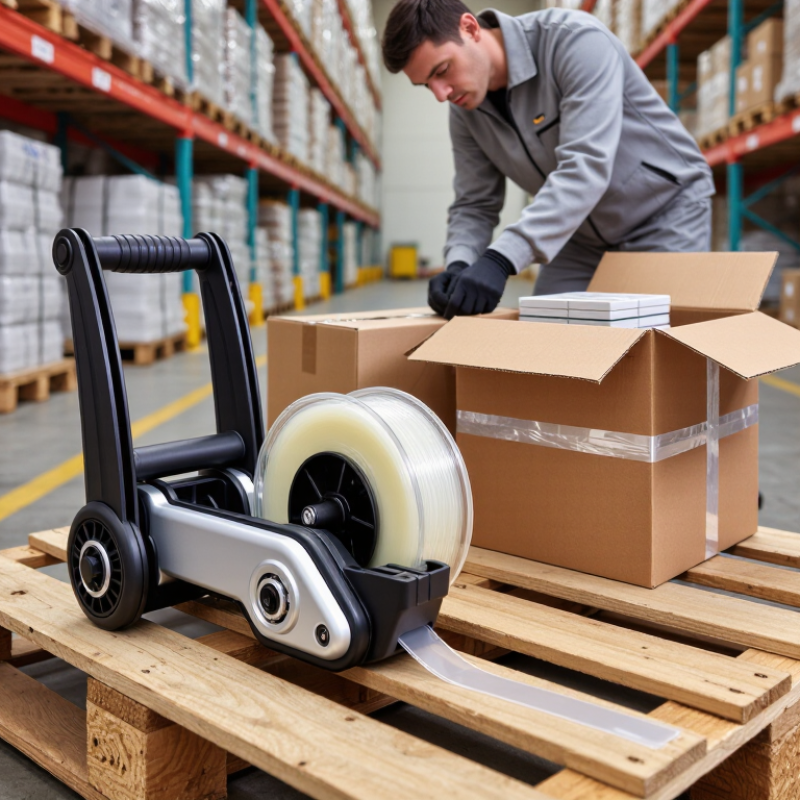
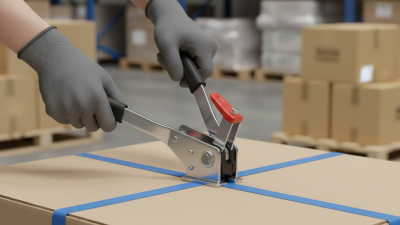
A plastic banding tool tensions and seals plastic strap around cartons, pallets, or bundled products. Most models work with polypropylene or polyester banding. The operator feeds the strap around the load, overlaps both ends, and places them into the tool. A tensioning mechanism then pulls the strap tight. The device may use friction welding, heat sealing, or a separate buckle.
The working process is simple, but pressure control matters. Too little tension leaves the package loose during handling. Too much tension can crush a carton or damage fragile contents. Watch the corners. Sharp edges often cut into the strap unless corner protectors are used. Battery-powered tools suit busy packing lines, while manual tools remain practical for occasional work. Pneumatic models can deliver steady tension, but they need a clean air supply and regular maintenance.
When choosing a tool in 2026, match its strap width, thickness, and material range to your daily packaging needs. Check the tension range, seal strength, cycle speed, grip comfort, and battery availability. A tool should also allow quick strap changes without awkward adjustments. Test it on a real load, not only an empty carton. That detail matters. I would avoid selecting by speed alone, because a fast tool with poor tension control creates rework and damaged goods. Specifications can look precise, yet operator training still affects results. Even experienced teams sometimes overlook seal cleanliness.
A plastic banding tool tensions polypropylene (PP) or polyester (PET) strap around a load, joins the strap with heat or friction welding, and cuts off the excess. The best choice depends on required tension, package volume, portability, and available power.
How to read the chart: Manual tools are suitable for occasional packaging and typically deliver about 250–450 kgf of tension. Battery-powered tools provide faster, more consistent operation at approximately 300–600 kgf. Pneumatic tools are generally selected for high-volume production and can reach around 400–700 kgf, depending on strap material and width.
For light or irregular loads, PP strap and a manual tool are often sufficient. For heavier loads, repeated cycles, or demanding transport conditions, PET strap with a battery-powered or pneumatic tensioning and sealing tool is usually more appropriate.
Choosing a plastic banding tool starts with the strap, not the machine. Polypropylene suits light cartons, printed boxes, and short warehouse storage. It is flexible, economical, and easy to seal. Polyester offers higher tension and better recovery for heavier loads. It also performs better when packages face vibration or longer transport. I have seen thin strap fail around sharp carton corners. A corner protector could have prevented it.
Measure the package weight, surface shape, and expected movement before selecting strap size. Common widths include 9, 12, 16, and 19 millimeters. Wider strap usually distributes pressure more evenly. Thickness also matters, especially on rough boxes or compressed loads. Match the tool’s tension range, sealing method, and strap compatibility carefully. A tool designed for light polypropylene may not handle rigid polyester smoothly. Check supplier specifications, then test a filled package under realistic conditions.
Tips: Keep strap edges away from exposed corners. Use protectors when pressure marks appear. Store coils dry and away from direct sunlight. Do not choose the strongest strap automatically; excessive tension can crush soft cartons. I once selected a thicker strap for a fragile shipment and created dents. That decision looked safe, but it was not. Record the test result, including breakage, slipping, and package deformation. Small details often reveal the better tool.
How to Choose a Plastic Banding Tool in 2026?
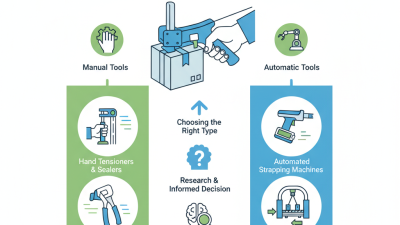
Choosing between manual, battery, pneumatic, and automatic banding tools starts with your workload. Manual tools suit occasional packing, low budgets, and mobile work. They are simple, but tension can vary between operators. Battery tools deliver faster, more consistent results without an air hose. They work well in warehouses handling mixed parcel sizes. However, charging routines and battery weight deserve attention. Small details matter.
Pneumatic tools provide strong, repeatable tension for demanding production areas. They need a reliable compressed-air system, regular moisture control, and safe hose management. Automatic tools offer the highest speed and consistency. They are useful for fixed packing lines with stable product dimensions. Their installation cost and maintenance needs are higher. No tool wins everywhere. In my experience, choosing speed alone often creates problems later. I once saw a fast line lose efficiency because operators struggled with awkward package alignment.
Tips: Test each tool with your actual plastic strap, package surfaces, and daily volume. Measure completed cycles per hour, not advertised speed. Check whether operators can hold the tool comfortably for a full shift. Review seal strength, tension accuracy, noise, maintenance access, and charging or air requirements. Leave room for human error. A tool that is slightly slower may be more reliable in real working conditions. Also, ask for training and service documentation before purchasing. Good records support safer decisions and easier troubleshooting.
| Comparison Dimension | Manual Tools Hand-operated tensioner and sealer | Battery Tools Cordless powered tensioner and sealer | Pneumatic Tools Compressed-air powered tool | Automatic Machines Integrated or conveyor-based system |
|---|---|---|---|---|
| Best Application | Low-volume packaging, occasional strapping, repairs, and mobile work | Medium-volume packaging where portability and consistent tension are important | High-volume production with an available compressed-air system | Continuous, repetitive packing lines requiring high throughput and minimal operator input |
| Compatible Strap Materials | Usually polypropylene (PP); selected models also support polyester (PET) | Commonly PP and PET, depending on the sealing and tensioning mechanism | Commonly PET and PP; some heavy-duty models are optimized for PET | Usually PP or PET, depending on the machine configuration and strap-feed system |
| Typical Strap Width | 12–19 mm | 9–19 mm | 12–19 mm | 5–16 mm for many general-purpose systems; wider configurations are available |
| Typical Strap Thickness | 0.5–1.0 mm | 0.5–1.0 mm | 0.5–1.0 mm | Approximately 0.45–1.0 mm, depending on the feed and sealing system |
| Typical Tension Range | Approximately 50–500 N; strongly dependent on operator strength and tool design | Approximately 100–2,500 N; adjustable electronic or mechanical settings are common | Approximately 400–4,000 N; suitable ranges depend on air pressure and tool type | Approximately 150–700 N for many PP/PET packaging applications, with adjustable settings |
| Typical Operating Speed | About 1 strap every 20–60 seconds, depending on the operator and seal method | About 1 strap every 8–20 seconds | About 1 strap every 5–15 seconds | Approximately 1.5–4 seconds per strap, depending on machine type and package size |
| Sealing Method | Manual metal seals, buckles, or friction seals; some models require a separate sealer | Heat welding or friction welding on powered models; some use seals | Heat welding or friction welding; generally designed for repeated operation | Heat sealing or friction welding integrated into the machine cycle |
| Power Requirement | None | Rechargeable battery, commonly 14.4–36 V depending on tool design | Compressed air, commonly 0.5–0.7 MPa operating pressure | Electrical supply, commonly single-phase or three-phase power depending on machine size |
| Compressed-Air Requirement | Not required | Not required | Typically about 300–700 L/min at operating pressure; verify the tool specification | Usually not required for standard electric machines, but special systems may use air |
| Typical Tool or System Weight | Approximately 2–5 kg, excluding separate accessories | Approximately 3–6 kg including battery | Approximately 3–7 kg, excluding the air hose | Approximately 100–500 kg for a standalone machine; integrated lines may be heavier |
| Operator Effort | High; manual tensioning, sealing, and cutting are usually required | Low to medium; the operator positions the tool and activates the cycle | Low; the operator still positions and removes the tool from the package | Very low after setup; the system can feed, tension, seal, and cut automatically |
| Portability | ★★★★★ Excellent; no cables, batteries, or air lines |
★★★★☆ Excellent, although battery weight and charging access matter |
★★★☆☆ Limited by the air hose and compressor location |
★☆☆☆☆ Designed for a fixed workstation or production line |
| Consistency of Tension | ★★☆☆☆ Varies with operator technique and package condition |
★★★★☆ Good when tension controls are correctly configured |
★★★★☆ Good with stable air pressure and proper maintenance |
★★★★★ Highly repeatable when settings and package dimensions are controlled |
| Initial Investment | Low | Medium | Medium to high, including compressor and air preparation equipment | High to very high, including machine integration and installation |
| Operating Cost | Low energy cost; labor time is the main cost factor | Low to medium; includes battery replacement and charging electricity | Medium; includes compressed-air generation, filtration, and maintenance | Low cost per package at high volume, but maintenance and downtime can be significant |
| Maintenance Requirements | Low; inspect cutters, seals, tensioning parts, and moving joints | Medium; maintain the battery, drive wheels, heating or welding parts, and tensioning system | Medium to high; lubricate the tool and maintain air filters, regulators, hoses, and fittings | High; requires scheduled inspection of feeders, sensors, motors, heaters, conveyors, and controls |
| Noise Level | Very low | Low to medium | Medium to high, mainly because of exhaust air and compressor noise | Low to medium, depending on motors, conveyors, and machine enclosure |
| Typical Throughput Suitability | Up to approximately 50–100 straps per hour | Approximately 50–250 straps per hour | Approximately 100–400 straps per hour | Approximately 300–1,200 or more straps per hour, depending on the line and package cycle |
| Main Advantages | Low purchase cost, simple operation, easy transport, and minimal infrastructure | Fast operation, cordless mobility, adjustable tension, and reduced operator fatigue | High productivity, strong tension capability, and suitability for demanding industrial use | Highest throughput, excellent repeatability, reduced labor per package, and easy line integration |
| Main Limitations | Slowest option, operator-dependent results, and greater physical effort | Battery charging, battery aging, higher weight, and higher purchase cost than manual tools | Requires a reliable compressor, air distribution, filtration, and hose management | High capital cost, fixed installation, more complex changeovers, and greater maintenance needs |
| Recommended Choice | Choose this option when strap volume is low and flexibility is more important than speed | Choose this option for mobile or medium-volume operations that need repeatable tension without an air system | Choose this option for intensive use where compressed air is already available and high tension is required | Choose this option when packaging is standardized, volumes are high, and the return on automation justifies the investment |
Data note: Values are typical industry ranges for plastic PP and PET banding equipment. Actual performance depends on strap width, thickness, material, package geometry, air pressure, battery condition, machine settings, and maintenance.
How to Choose a Plastic Banding Tool in 2026?
Choosing a plastic banding tool starts with its tension control. In my experience, uneven tension causes loose packages, crushed cartons, and wasted strap. Look for adjustable tension settings that match strap width, thickness, and package strength. A smooth tensioning system matters more than maximum pulling force. Too much force can damage soft boxes. Too little force allows movement during transport.
Sealing performance depends on the joining method, cycle speed, and temperature stability. Friction-weld tools should create a clean, firm seal without melting excessive plastic. Check whether the seal remains consistent after repeated cycles. Cutting quality also deserves attention. A sharp, protected cutter should leave a straight edge and avoid dangerous strap tails. Some tools cut automatically after sealing, reducing handling time. However, automatic features can fail when debris builds up. I have seen operators trust them too quickly.
Tips: Test the tool on your actual cartons before purchasing. Measure seal strength, tension consistency, and cutting time. Inspect the strap path daily. Clean dust from the sealing area. Hold the package steady during operation. A comfortable handle reduces wrist fatigue, but comfort alone does not prove durability. Ask for service instructions and replacement-part details. My own preference has changed after using tools in cold warehouses; battery performance and grip texture mattered more than expected.
When choosing a plastic banding tool, start with your actual workload, not the lowest online price. A small manual tensioner may suit ten cartons a day. It becomes tiring when the line handles 200. For repeated packing, a battery-powered or pneumatic model can reduce wrist strain and keep tension more consistent. Check the strap width, thickness, and material your packages require. A tool made for narrow polypropylene strap may not handle stronger polyester strap safely. Measure before buying. Small mismatch, big problem.
Budget includes more than the tool. Add batteries, chargers, seals, blades, air lines, repairs, and operator training. Compare the cost per packed load over twelve months. A cheaper tool may need frequent adjustment, while an expensive one may sit unused. That is wasted capacity. Ask how quickly parts are available and whether tension settings are clear. If workers must guess, results will vary. Test the tool on your own cartons, including uneven loads and cold storage conditions. Catalog photographs cannot show every weakness.
Look for balanced weight, a readable control panel, and a grip that remains secure with gloves. Check whether the cutter leaves sharp strap edges. Review safety instructions and service records where possible. My practical preference is simple: choose the lightest tool that meets your daily volume without forcing maximum tension. I sometimes overestimate future growth, so I now buy for realistic demand and allow modest headroom. That decision is less exciting, but usually easier to defend.