+86 19706006102

+86 19706006103
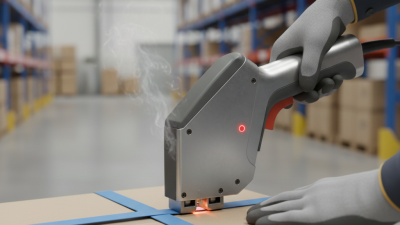
An Electric Bander Tool can make packaging more consistent when bundles need secure, repeatable straps. It tensions and seals banding with less manual effort than hand tools. On a busy line, that can mean fewer awkward pulls, steadier strap placement, and a cleaner package. Small details matter. A strap that is too loose may shift during handling; excessive tension can damage cartons or products.
Manufacturing-quality expert W. Edwards Deming wrote, “Quality comes not from inspection, but from improvement of the production process.” That principle offers a useful lens for choosing banding equipment. The tool is only one part of the process. Operators also need suitable banding material, settings matched to the load, and routine checks on seals and wear. A machine cannot fix poor setup by itself.
The practical case depends on the work. For frequent bundling, an electric model may reduce repetitive hand effort and help keep results uniform. For occasional use, its cost and maintenance may be harder to justify. Compare battery runtime, tool weight, strap compatibility, seal quality, and service support before buying. Try it on real packages, not just a showroom sample. That test can reveal what a specification sheet misses. There is no perfect tool for every line. The best choice fits the load, operator, and pace of the job.
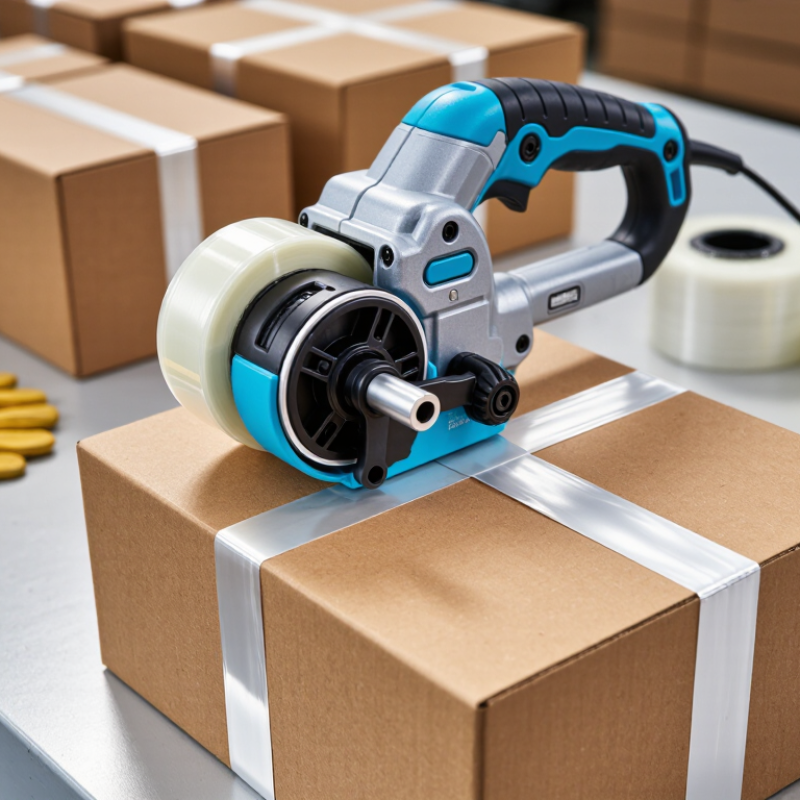
An electric bander tool tensions and seals plastic or paper bands around products. It usually combines feeding, tensioning, welding, and cutting in one compact unit. The operator places the package inside the banding area. A sensor detects its position. Then, the motor pulls the band tightly around the load. Heat or ultrasonic energy seals the overlap. The blade trims the remaining material.
This process creates a consistent package without manual knotting or tape application. Tension settings can be adjusted for cartons, printed materials, and fragile bundles. A firm band helps keep stacks aligned during handling. However, tighter is not always better. Excessive tension may crush corners or mark soft products. The International Federation of Robotics reported 541,302 industrial robots installed worldwide in 2023, showing the wider move toward repeatable automation. Electric banders offer a smaller, more accessible step in that direction.
Tips: Test tension on the actual package before production. Check band alignment after every material change. Keep hands away from the sealing area. Do not assume the factory setting fits every load. PMMI packaging automation research repeatedly identifies labor availability as a major equipment concern. Even so, an electric bander needs trained operators and regular cleaning. Dust around the feed path can cause slipping, weak seals, or wasted band. The tool saves effort, but it does not replace judgment.
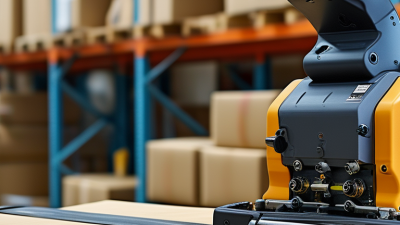
Electric banding secures packaged loads by applying consistent tension around cartons, bundles, or palletized goods. Unlike manual tools, an electric bander can tension and seal the strap with less variation between operators. That consistency matters.
A stable strap holds the load together during lifting, vehicle movement, and routine warehouse handling. The operator can position the strap, check the package edges, and activate the tool with controlled pressure. Proper tension should compress the load without crushing cartons or deforming corners. Edge protectors help distribute pressure across fragile surfaces. The strap must also match the package weight and shape. More tension is not always safer.
In practical packaging work, I have found that small details often decide whether a load stays secure. The stack should be square before banding. Loose film, uneven layers, or damaged cartons can reduce stability. An electric tool cannot correct poor stacking. That is easy to forget.
A quick inspection should confirm a firm seal, centered straps, and no visible strap damage. Workers should also follow the tool’s operating instructions and use suitable protective equipment. Results can vary with strap material, temperature, and package design. Testing a sample load before full production is sensible. Sometimes, the first setup looks efficient but needs adjustment. Proper training and regular equipment checks make the securing process more reliable.
Typical packaging performance factors and load-security benefits of electric banding tools
| Packaging Dimension | Typical Electric Bander Capability | How It Secures the Packaged Load | Practical Consideration |
|---|---|---|---|
| Tension Control | Adjustable tension is commonly available, with tool ranges varying from several hundred newtons to more than 4,000 N depending on the model and strap type. | Controlled tension compresses cartons, bundles, and palletized products so that items are less likely to shift during handling and transport. | Use only the tension needed to stabilize the load. Excessive tension can crush fragile cartons or damage product edges. |
| Strap Materials | Many electric tools are designed for polypropylene (PP) or polyester (PET) strapping; some specialized tools accommodate steel strap. | The correct strap material combines tensile strength, flexibility, and resistance to impact, helping the package remain closed under vibration and movement. | PET generally offers higher tensile strength and better elastic recovery than PP, while PP is often selected for lighter-duty applications. |
| Sealing Method | Electric models commonly use friction welding for thermoplastic straps, creating a sealed joint without metal buckles or separate seals. | A properly welded joint distributes holding force across the strap connection and prevents the strap from loosening at the closure point. | The weld area must be clean, correctly aligned, and fully fused before the package is moved. |
| Application Speed | A trained operator can typically tension, weld, and cut a strap in a few seconds, depending on load size, strap width, and tool settings. | Faster cycles make it practical to apply multiple straps, which improves load containment and reduces reliance on a single restraint point. | Actual throughput depends on operator skill, package geometry, strap feeding, and the number of straps required per load. |
| Consistency of Results | Motor-driven tensioning and programmable or adjustable welding cycles provide more repeatable results than manual tightening. | Consistent strap force reduces weakly secured packages and helps maintain similar compression across repeated shipments. | Periodic inspection and correct adjustment are still required because strap quality and load condition affect performance. |
| Resistance to Vibration | Properly tensioned PET or PP straps can maintain package compression during ordinary handling and transport vibration. | Maintained compression limits movement between cartons, layers, or bundled components, reducing rubbing, edge damage, and load spreading. | For unstable or tall loads, combine banding with corner protection, stretch film, blocking, or a suitable pallet pattern. |
| Operator Effort | The tool performs the main tensioning and sealing actions, reducing repetitive manual pulling and buckle handling. | Lower operator fatigue supports more consistent strap placement and tension throughout a production shift. | Operators should still use correct lifting posture, hand protection, and training for strap-cutting and release hazards. |
| Load Coverage | A single package can be secured with vertical, horizontal, or crosswise strap patterns according to its shape and stability requirements. | Multiple strap directions restrain both upward movement and lateral shifting, improving containment on mixed or irregular loads. | Straps should be positioned evenly and protected from sharp edges with edge guards or corner boards where necessary. |
| Battery Operation | Cordless electric tools commonly use rechargeable battery packs, allowing banding away from fixed workstations and power outlets. | Portable operation makes it easier to secure oversized, heavy, or irregular loads at the point of packing. | Battery runtime varies with tension level, strap size, cycle frequency, temperature, and battery capacity. |
| Quality Verification | Operators can check strap alignment, tension, weld appearance, and strap seating immediately after each cycle. | Visual and functional checks help identify incomplete welds, damaged straps, or uneven tension before the load enters storage or transport. | A secure package requires both a sound strap joint and a stable overall load design; banding alone cannot correct an unstable pallet pattern. |
Note: Performance figures and capabilities are typical industry ranges or operating characteristics. Exact results depend on the electric bander, strap specification, package design, operator settings, and transport conditions.
Electric banding tools improve speed on busy packaging lines. They tension, seal, and cut the band with limited hand movement. This reduces delays between cartons, bundles, and palletized items. A trained operator can maintain a steadier rhythm, especially during long production runs. Small timing gains become significant after several hundred packages.
Consistency is another practical advantage. Adjustable tension helps prevent loose bands and unnecessary product compression. The result is a more uniform package appearance and better load stability during routine handling. Operators also avoid repeated manual pulling and cutting. Their hands may feel less strained by the end of a shift. Still, the tool is not magic. Incorrect settings can damage soft cartons or leave bands too loose. Regular checks remain necessary.
Tips: Set tension according to the package material, not habit. Test several bundles before full production. Keep the sealing area clean and inspect the blade regularly. Let operators report wrist discomfort early. A short adjustment can prevent a longer interruption. Recording band failures can also reveal patterns, although the data may be incomplete at first. Consistent training matters more than raw tool speed.
Electric banders suit repetitive packaging tasks that demand clean, consistent bundles. They work well with cartons, printed materials, retail multipacks, bakery trays, and flat mailers. A guided strap wraps each item quickly, while adjustable tension reduces crushed corners and loose bands. The operator can keep both hands near the product. That matters during long shifts.
In a packing cell, electric banders are useful when products arrive in predictable sizes. They can secure small boxes before palletizing, group promotional kits, and hold folded garments for dispatch. They also fit newspapers, catalogues, and document bundles. PMMI’s 2024 packaging machinery outlook identifies labor availability and throughput as major automation concerns. Electric banding addresses both, but only when setup remains simple. A poorly positioned guide can create jams and wasted material.
The International Federation of Robotics reported 541,302 industrial robots installed worldwide in 2023. Banding is less complex than robotics, yet it follows the same efficiency trend. It can reduce repetitive hand tensioning and improve bundle appearance. However, it is not a substitute for pallet strapping. Irregular loads, heavy cases, and sharp-edged products may require stronger systems. Test several materials first. Check seal strength, product pressure, and operator reach. In practice, the fastest setting is not always the safest one. That detail is easy to miss.
Electric banders are best suited to repetitive packaging tasks that require consistent tension, fast cycle times, and tidy unitization. The comparison below rates common applications by practical suitability for electric banding.
Suitability score: 1 = limited fit, 5 = strong fit. Higher scores reflect stable package geometry, frequent repeat work, and clear benefits from consistent band tension.
An electric bander tool can secure cartons faster than manual tensioning. It also delivers more consistent strap pressure across repeated packing tasks. The choice, however, should match the packaging line rather than the advertised speed. The International Federation of Robotics reported 541,302 industrial robots installed worldwide in 2023. That figure reflects a wider move toward automation, but automation still needs practical operator control.
Material compatibility is the first selection factor. Check whether the tool supports polypropylene, polyester, or other approved strapping materials. Measure strap width and thickness carefully. Then compare the required tension range with the carton’s strength. Excessive tension can crush lightweight boxes. Weak tension can allow movement during transport. Seal quality matters too, especially when cartons face vibration or uneven stacking.
Battery performance, tool weight, and service access also deserve close attention. A heavy tool may feel acceptable during a short test, then strain an operator after several hours. Consider battery runtime, charging time, spare battery costs, and replacement parts. Smithers projects the global packaging market will exceed 1.2 trillion dollars by 2028, increasing pressure for reliable throughput. Still, higher output is not automatically better. In real warehouses, a slightly slower tool with stable seals may reduce rework. I have found that small details, such as a clear tension display and easy strap threading, often matter more than impressive cycle claims. Safety testing and operator training should remain part of the purchase decision.