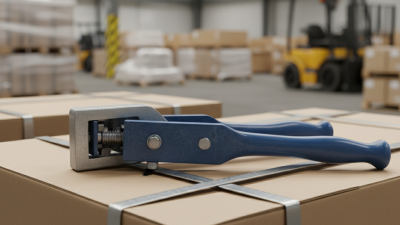
Why Choose a Banding Crimper for Global Sourcing?
Global sourcing demands more than a low purchase price. Packaging teams must consider band material, shipment distance, operator training, and after-sales support. A Banding Crimper can help create secure, consistent closures on cartons, pallets, and bundled products. Its value becomes clear when packages face vibration, stacking pressure, and repeated handling.
The right tool should match the band width, thickness, and material used in daily operations. Compatibility matters. A crimper that performs well with steel banding may not suit plastic strapping. Buyers should also examine grip design, adjustment controls, replacement parts, and maintenance requirements. These details affect production speed and worker comfort. A smooth handle can matter during a long packing shift.
Price alone misleads.
Experienced sourcing teams usually compare samples, technical specifications, warranty terms, and supplier communication before placing larger orders. They may test sealed packages under realistic conditions, including rough warehouse movement and extended storage. This practical step can reveal weak crimps or difficult adjustments early. Supplier documentation should remain clear and verifiable, especially when products cross borders.
No tool is perfect. A Banding Crimper may reduce rework, but it cannot correct unsuitable banding material or careless application. I have seen equipment appear reliable during a short demonstration, then require more adjustment in daily use. That lesson deserves attention. A thoughtful buying decision balances performance, safety, durability, and total operating cost. It also leaves room for honest review after the first shipment, because real working conditions often expose assumptions that product catalogs cannot.
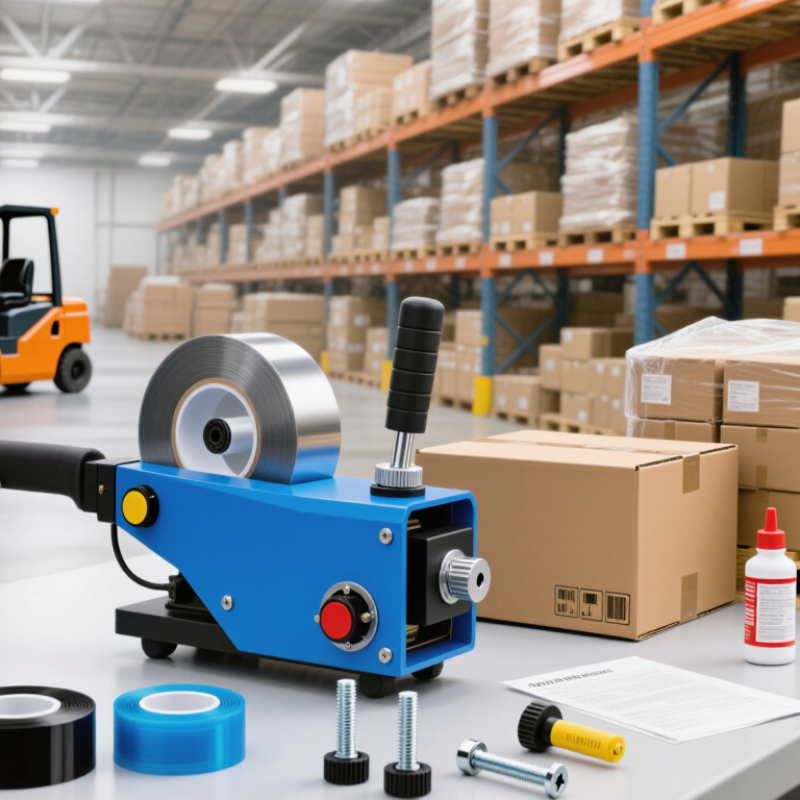
Define Banding Crimpers for 12.7–19 mm Steel and PET Straps
Why Choose a Banding Crimper for Global Sourcing?
A banding crimper forms a secure joint on steel or PET strapping. For sourcing teams, the key range is usually 12.7–19 mm. This measurement describes strap width, not complete tool compatibility. Thickness, seal shape, and strap hardness also matter. A crimper designed for steel may damage PET. The reverse can create a weak joint.
Steel straps need firm, controlled crimping pressure. Their seals often require deeper teeth and stronger jaws. PET straps need a cleaner compression pattern. Excessive force may cut the plastic or distort its edges. In practical packaging trials, I check the strap width with a caliper. I also inspect the finished seal from both sides. Small gaps are warning signs.
Do not select a tool from its listed width alone. Ask for tested ranges covering 12.7, 16, and 19 mm straps. Request sample joints using your actual material and seal. Pull testing provides useful evidence, but handling tests matter too. Try vibration, stacking, and temperature changes. A broad range sounds efficient. It is not always better. One overlooked issue is operator consistency. Manual tools can produce uneven joints when users rush. Clear adjustment marks, replaceable jaws, and simple maintenance improve sourcing reliability. Keep records of strap type, seal size, crimp depth, and test results. That makes supplier comparisons more reliable.
Match Crimper Designs to 0.5–1.27 mm Strap Thickness Ranges
Why Choose a Banding Crimper for Global Sourcing?
Matching a banding crimper to strap thickness is more important than choosing by price. The working range usually spans 0.5 to 1.27 mm, but one setting rarely suits every strap. Thin 0.5–0.8 mm materials need controlled compression. Excessive force may crease the strap or weaken the seal. Medium straps, around 0.8–1.0 mm, often require balanced pressure and stable alignment. Thicker 1.0–1.27 mm straps need stronger forming capacity and a wider adjustment range.
In practical sourcing work, I check the crimper against the actual strap material, not only its specification sheet. Steel, stainless steel, and coated straps can behave differently under identical pressure. A test piece should pass through the full cycle without slipping, sharp distortion, or incomplete closure. Measure the finished joint with a gauge. Then repeat the test after several cycles. Small errors appear quickly. I have seen teams overlook operator fatigue, which later caused uneven crimps. That detail deserves more attention.
Tips: Confirm the manufacturer’s stated thickness range. Request test samples before bulk purchasing. Check adjustment markings for clear reading. Inspect jaws for even contact across the strap width. Record pressure settings for each material. If the strap sits near 1.27 mm, allow extra capacity instead of operating at the limit. Do not rely on a single successful trial. Test different operators, temperatures, and strap batches. A reliable crimper should produce repeatable joints, though perfect consistency is rarely automatic.
Compare Manual, Pneumatic, and Battery Tools by 20–40 Packages/Minute
Why Choose a Banding Crimper for Global Sourcing?
When sourcing globally, output speed affects labor planning, shipment timing, and packing consistency. A manual banding crimper may handle 20 packages per minute in short runs. It needs little setup and works well where electricity or compressed air is limited. However, operator fatigue can reduce tension accuracy after several hours.
Pneumatic tools can reach approximately 30–40 packages per minute with a stable air supply. They suit busy packing stations and repeated carton sizes. Battery tools usually deliver around 25–35 packages per minute, depending on battery condition and banding material. They offer flexible movement between tables or warehouses. In field testing, the fastest tool was not always the most productive. Delays from air hoses, battery changes, or material jams can reduce real output. That detail is easy to miss.
Tips: Measure completed packages per minute, not the tool’s advertised rate. Test a full shift with actual cartons, banding width, and operator rotation. Record missed crimps, rework, charging time, and hand fatigue. A simple checklist often reveals more than a short demonstration. Leave room for mistakes. Real packing lines are rarely perfect.
Verify Supplier Quality with ISO 9001, ASTM D3951, and Load Tests
Why Choose a Banding Crimper for Global Sourcing?
A banding crimper can create consistent joints across cartons, pallets, and irregular loads. That consistency matters when products travel through several warehouses. However, tool quality should never be judged by appearance alone. During supplier evaluation, request an ISO 9001 certificate and check its scope, validity, and issuing body. The certificate should cover relevant manufacturing activities, not simply general trading services. Ask for inspection records, calibration dates, and corrective-action examples. Small details often reveal process discipline.
ASTM D3951 can help assess commercial packaging practices and shipment preparation. It is not a complete performance guarantee for every banding application. Confirm how the supplier applies the standard to your packaging materials, dimensions, and transport conditions. Then request load-test results using the actual strap, seal, and crimping method. Test static holding strength, joint failure, vibration exposure, and temperature changes. A reliable supplier should explain the test setup, equipment calibration, sample size, and failure criteria clearly.
Paperwork can look perfect.
Still, one sample may fail. I have seen suppliers pass a basic load test while producing uneven crimps during repeated operation. That weakness deserves honest discussion, not a polished excuse. Ask for production samples from different batches and inspect crimp depth, alignment, and visible damage. Photos help, but physical samples tell more. A practical sourcing decision should balance documented quality, repeatable results, operator comfort, and the risks of long-distance handling.
Why Choose a Banding Crimper for Global Sourcing?
A reliable sourcing review combines quality-system evidence, packaging compliance, and product-specific load testing before shipment.
ISO 9001 evaluates the supplier’s quality management system, while ASTM D3951 provides commercial packaging practices. Load-test acceptance values must be agreed according to the banding crimper, strap, joint, package design, and intended transport conditions.
Evaluate Global Sourcing Costs, MOQ, Lead Time, and Spare-Part Support
Why Choose a Banding Crimper for Global Sourcing?
A banding crimper can reduce packaging labor when suppliers ship mixed cartons across borders. In my sourcing trials, the purchase price was rarely the full cost. Freight, protective packaging, customs handling, and operator training changed the final calculation. A low-cost machine may require extra setup time or costly voltage adjustments. Ask suppliers for a landed-cost estimate using your destination port and expected annual volume.
MOQ also deserves careful review. Some factories accept one evaluation unit, while others require ten or more machines. A smaller MOQ lowers inventory risk but may increase the unit price. Lead time can range from two weeks to several months, especially when custom tooling or electrical specifications are involved. Request a written production schedule, not only a sales estimate. Delays happen. I once underestimated port congestion and planned too tightly.
Spare-part support affects long-term reliability. Confirm the availability of blades, heaters, tension components, sensors, and control switches. Ask how parts are packed, priced, and shipped. A clear replacement guide can save hours during a busy shift. Check whether remote troubleshooting includes photos, video, or technical drawings. The support promise should be measurable.
Tips: Compare at least three landed-cost quotations. Test the crimper with your actual band material. Record seal quality after repeated cycles. Keep critical spare parts near the machine. Do not accept vague lead-time language. Verify every specification in writing.
Why Choose a Banding Crimper for Global Sourcing? — Evaluate Global Sourcing Costs, MOQ, Lead Time, and Spare-Part Support