Leave Your Message

Best Banding Crimper Manufacturer in China

Choosing the Best Banding Crimper Manufacturer in China starts with a practical question: will the tool deliver consistent tension and secure seals on the actual production floor? Packaging teams handle different band materials, package sizes, and work rates. A crimper that feels solid in a sample test may behave differently during a full shift. Small details matter. Grip comfort, jaw wear, spare-part availability, and operator training all affect daily performance.

Industry reports offer useful context, though they do not replace product testing. PMMI’s 2024 State of the Industry report reviews automation, labor, and productivity pressures facing packaging operations. Smithers’ global packaging market research also tracks changing demand across materials and end-use sectors. Together, these sources underline why manufacturers need equipment that fits their processes, not simply the lowest purchase price. A reliable Banding Crimper should produce repeatable joints, work with the specified banding, and come with clear technical support. Ask suppliers for test records, material compatibility details, and realistic maintenance guidance. Then verify those claims with samples or a production trial. That step is easy to skip. It is also where buyers may catch issues such as uneven crimps or awkward handling. No manufacturer is perfect; transparent answers about limitations can be more useful than polished promises. This guide examines the factors that help buyers assess Chinese manufacturers with care and confidence.
Best Banding Crimper Manufacturer in China

Banding Crimpers: Function, Types, and Role in Industrial Packaging

Banding crimpers join overlapping band ends by pressing a metal seal or deforming the band itself. In industrial packaging, that joint helps secure steel or stainless-steel bands around pallets, pipes, and heavy components. The crimper does not create tension; a separate tensioning tool usually does. That distinction matters.

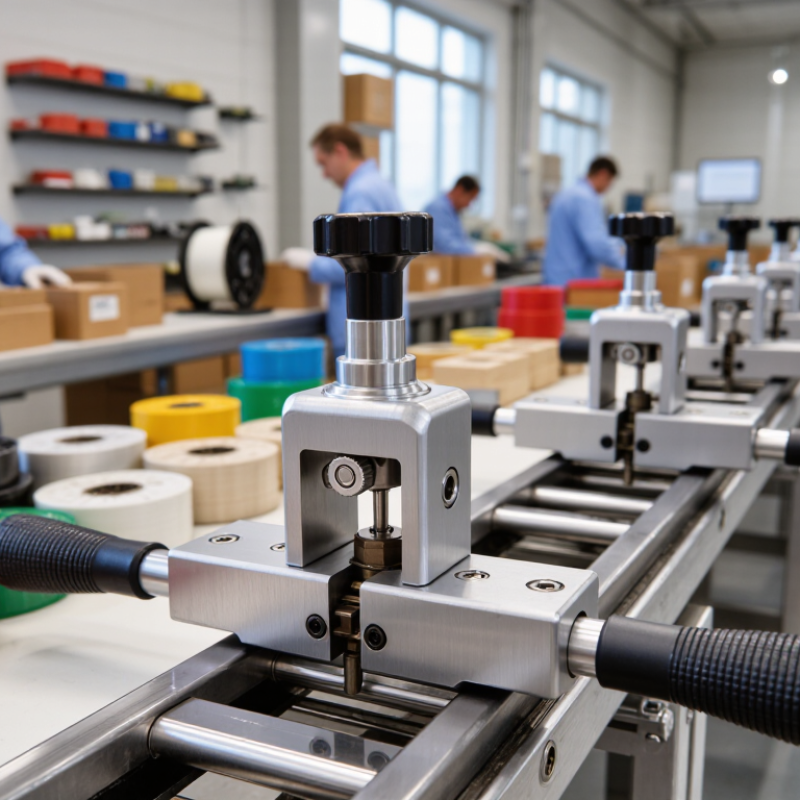
Manual crimpers suit lower-volume work and offer direct control. Pneumatic models reduce hand effort on repetitive lines, while battery-powered tools can improve mobility around large loads. Tool choice depends on band material, width, thickness, seal style, and production pace. Check compatibility before purchase. A mismatch can leave a weak joint.

On a packing floor, operators should seat the seal squarely and crimp it fully. A small skew can affect holding strength. Crimp quality also depends on clean, undamaged banding and consistent technique. The tool alone cannot compensate for poor setup. For buyers evaluating a Chinese manufacturer, request dimensional specifications, sample tools, and clear operating guidance. Trial crimps on the intended banding are useful. Yet one successful test is not enough; repeat checks under normal working conditions reveal more.
Steel-Strap Compatibility: ASTM D3953 and Key Material Specifications

Best Banding Crimper Manufacturer in China

Steel-Strap Compatibility: ASTM D3953 and Key Material Specifications

A reliable banding crimper must match the steel strap, not just look sturdy. ASTM D3953 covers flat steel strapping and seals, offering useful reference points when checking strap dimensions and application requirements. Confirm the strap width and thickness against the crimper’s stated capacity. A mismatch can leave a weak crimp or damage the seal. Small differences matter.

Material properties also affect tool performance. High-tensile steel needs a crimper suited to its strength and thickness; softer strap may behave differently under the same pressure. Check the seal type, strap finish, and edge condition as well. In practical use, oily surfaces or burrs can affect feeding and handling. Standards help define specifications, but they do not replace a fit test with the actual strap and seal. That part is easy to overlook.

Crimper Performance: Joint Strength, Tool Life, and Quality-Test Criteria

Best Banding Crimper Manufacturer in China

A crimped joint should be judged by how it fails, not only by its peak pull force. For a fair comparison, test samples made with the same strap material, width, overlap, and setup. Record whether the joint slips, tears, or separates at the crimp. Small details matter. A clean test log should include tool settings, sample conditioning, and measured results, so another operator can repeat the trial.

Tool life needs more than a count of operating cycles. Inspect jaw teeth for rounding, check alignment, and track changes in joint strength as the tool wears. A crimper that performs well on its first day may produce uneven crimps after prolonged use. Practical evaluations should include repeated tests at intervals, with worn components noted rather than quietly replaced. That matters.

Quality checks at a Chinese manufacturing facility can combine incoming material inspection, in-process crimp tests, and final tool verification. Ask for clear acceptance limits and traceable test records, not just a pass label. Test results still have limits: laboratory samples cannot capture every operator, temperature, or field condition. That gap deserves attention. A useful supplier discussion covers both measured performance and the conditions those measurements represent.

Best Banding Crimper Manufacturer in China - Crimper Performance: Joint Strength, Tool Life, and Quality-Test Criteria
Performance Area Metric How to Test or Calculate Quality Record / Acceptance Basis
Joint strength Joint breaking force (kN) Place a completed band joint in a tensile-test fixture and pull until the joint or band fails. Record the peak force and failure location. Record the measured force, band material, width, thickness, and failure mode. Compare with the application’s specified load requirement.
Joint efficiency Joint strength as a percentage of parent-band strength Joint efficiency (%) = joint breaking force ÷ breaking force of an unjointed specimen of the same band × 100. Test jointed and unjointed specimens from the same band lot using the same test setup. Set the required percentage in the product specification.
Crimp formation Crimp profile, closure, and visible defects Inspect completed joints for incomplete closure, cracks, severe distortion, slipping, and inconsistent crimp impressions. Measure critical dimensions where specified. Use approved visual samples and drawing tolerances. Record defects and their frequency; do not treat appearance alone as proof of joint strength.
Repeatability Variation in joint breaking force across repeated tests Prepare multiple joints under the same stated conditions. Report the number tested, individual results, mean, range, and standard deviation. Define the sample size and allowable variation in the inspection plan. Keep band, seal, operator, and tool settings consistent during comparison.
Tool life Completed crimp cycles before a defined service limit Run the tool with the specified band and operating conditions. Count cycles and inspect at planned intervals for wear, looseness, damage, or loss of joint performance. Report cycles, maintenance, replacement parts, and the failure or service-limit definition. Tool life depends on band material, dimensions, operating conditions, and maintenance.
Crimping jaws Wear, chipping, alignment, and dimensional change Inspect jaw surfaces and alignment before and after endurance testing. Measure specified jaw dimensions using suitable calibrated measuring equipment. Compare measurements with the tool drawing or maintenance limits. Record inspection dates and any jaw replacement.
Operating consistency Successful crimp completion and cycle-to-cycle function Operate the tool through repeated cycles at the specified band size and working conditions. Record incomplete crimps, jams, abnormal effort, and interruptions. Use a documented test procedure and report operating conditions, observed faults, and corrective actions.
Measurement control Calibration status of test and inspection equipment Verify that the force-testing machine and dimensional measuring equipment are within their calibration periods before testing. Include equipment identification, calibration status, test date, and operator in the test record.
Application suitability Compatibility with band material and dimensions Confirm the tool is specified for the band material, width, and thickness being used; verify performance with representative production samples. Document the approved band range and application-specific acceptance limits. There is no single universal joint-strength or tool-life threshold for every banding system.

Test values and pass limits should be established for the specific banding system and application. Results are meaningful only when the band, joint components, tool settings, and test method are documented.

How to Evaluate Chinese Manufacturers: ISO 9001 and Production Quality Controls

Choosing a banding crimper manufacturer in China requires more than checking product photos or comparing prices. Ask for the current ISO 9001 certificate, its scope, issuing body, and expiry date. The scope should cover the factory and relevant production activities. A certificate is a useful signal, not a guarantee. Details matter.

Review the production controls behind each tool. Ask how incoming steel is inspected, how measuring equipment is calibrated, and whether batches can be traced by lot number. For a crimper, check jaw alignment, ratchet release, handle movement, and tension consistency. Request inspection records and test a production sample, not just a specially prepared display unit. Small differences can affect repeated use.

I would not treat a polished audit file as the whole story. Ask how the manufacturer records defects and verifies corrective actions. No factory is flawless. The response matters. Compare documented procedures with what staff actually do on the production floor, and make sure the sample matches the quoted model. A few clear records and direct answers can reveal more than broad quality claims.

Evaluating Chinese Banding Crimper Manufacturers: Quality Control Priorities

Suggested buyer-defined evaluation weights for a supplier audit (%)

Use these suggested weights to structure a supplier assessment, then verify each control with audit records and product samples. ISO 9001 certification indicates a quality management system; it does not by itself guarantee product quality or process capability.

Choosing a Crimper by Strap Width, Thickness, and Application Requirements

Best Banding Crimper Manufacturer in China
Choosing a Crimper by Strap Width, Thickness, and Application Requirements

Start with the strap specification, not the tool’s advertised force. Check its width and thickness range, then confirm the crimper’s jaws and compatible seal match both. A jaw made for narrow polypropylene strap may not form a reliable joint on thicker polyester. One failed joint can loosen a pallet during handling. Also consider the application: hand tools suit occasional strapping, while powered tools can reduce effort on frequent, repetitive jobs. I would still test the proposed tool with your actual strap and seal; catalog ranges do not always reveal awkward handling.

MHI’s 2024 Annual Industry Report found that 55% of surveyed organizations planned to increase supply-chain technology investment. For crimper selection, that makes repeatability and cycle demands worth assessing alongside purchase price. Specify daily strap volume, package shape, working space, and whether operators need to reach around bulky loads. A narrow jaw may struggle near corners. A powerful tool can also be a poor fit if it is heavy or difficult to position. These details are easy to overlook.

Tips: Ask for the tool’s minimum and maximum strap width and thickness, then run sample joints under realistic tension. Check joint consistency and operator comfort. A quick bench test helps, though it cannot fully reproduce a busy shift.