
Electric, pneumatic, and manual strapping machines: Differences and selection guide
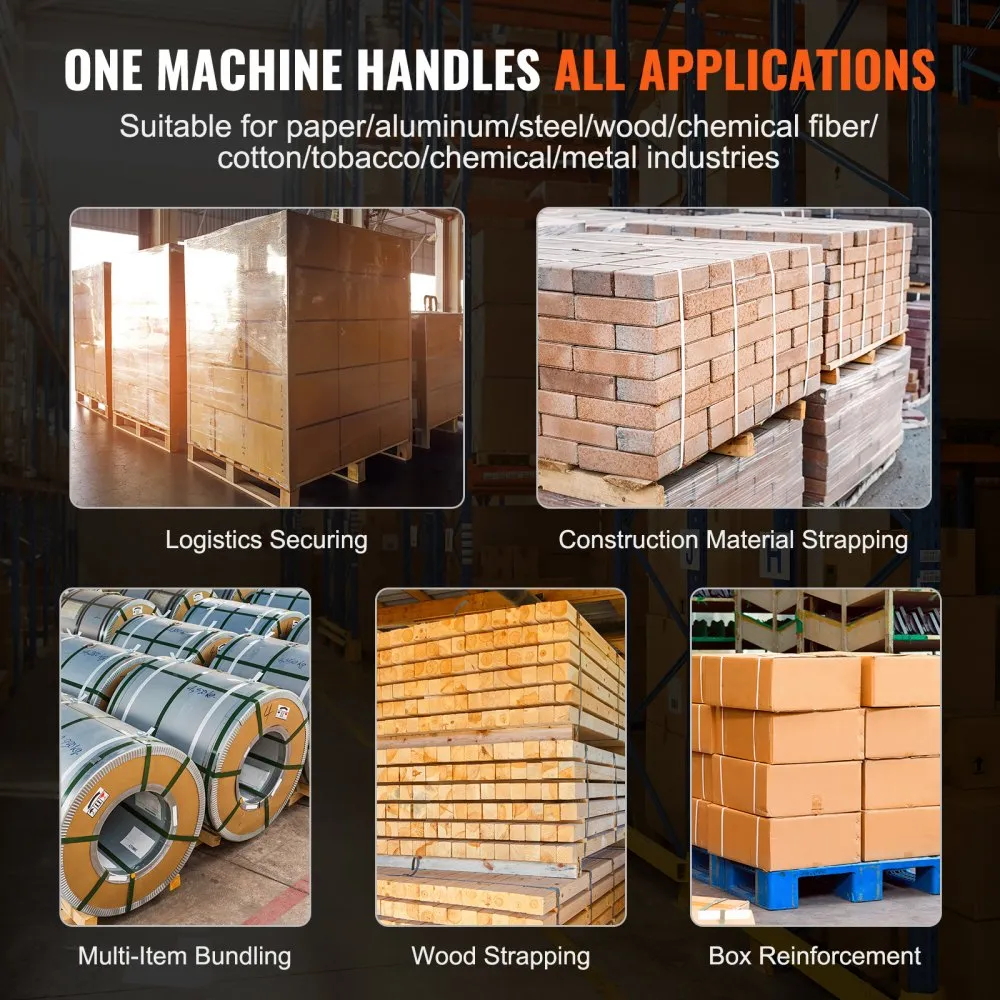
In the fields of logistics packaging, warehousing and transportation, manufacturing, etc., Strapping Machines are key equipment to ensure the stability of goods and reduce losses. Based on the different power sources, the mainstream Strapping Machines on the market can be divided into three categories: manual, pneumatic, and electric. There are significant differences in the working principles, performance, and application scenarios of the three types. Improper selection may lead to low efficiency, wasteful costs, or inconvenient operation. This article will focus on the core differences and provide a clear selection reference for users with different needs.
1. Core Power and Working Principle: Essential Differences Between the Three Types of Devices
1. Manual strapping machine: purely human-Powered, minimalist structure
Manual strapping machines require no external power and rely entirely on the operator's physical strength to complete the strapping process. Its core structure includes a tensioner, a buckle snapper, and a cutter (some models integrate all three). During operation, the strapping tape must be manually wrapped around the goods, the tensioner is rotated to tighten the tape, the buckle snapper is used to press the metal buckle together, and the cutter is used to cut off the excess tape.
The advantages of this type of equipment are its simple structure, lack of complex parts, and virtually no maintenance. However, its disadvantages are also very obvious - every step of the operation relies on manpower, the binding force is limited by the operator's physical strength, and there is no guarantee that the tightness of each bundle is consistent.
2. Pneumatic strapping machine: powered by compressed air, efficient and stable
Pneumatic strapping machines use compressed air as their power source and require an air compressor. They contain pneumatic components such as cylinders and valves. During operation, compressed air pushes the cylinder piston, automatically tightening, heat-sealing (or snapping), and cutting the strapping tape. Compared to manual models, the core advantage of pneumatic equipment lies in "automation": simply press the operating button to complete a strapping operation in seconds, and the tensioning force is regulated by air pressure, maintaining a stable strapping effect.
However, pneumatic strapping machines have certain requirements for their operating environment – they must have a stable supply of compressed air, and the length of the air pipe will limit the range of movement of the equipment, making them more suitable for fixed-station operations.
3. Electric strapping machine: Electric drive, flexible and efficient
Electric strapping machines are powered by batteries (or mains electricity) and come in two types: wired and wireless (lithium battery). Their core components are the motor and control chip. The motor drives the tensioning and sealing mechanisms, while the control chip precisely adjusts parameters such as strapping force and sealing time. Some high-end models also support intelligent features such as fault self-diagnosis and counting.
Electric strapping machines combine "efficiency" and "flexibility": wireless models do not require external power lines or air pipes and can operate in any scenario; at the same time, the tensioning force driven by the motor is much greater than that of manual strapping, and the stability is better than that of pneumatic strapping (not affected by air pressure fluctuations).
2. Selection Guide: Match the most suitable equipment according to your needs
1. Choose a manual strapping machine: meeting the demand for “low frequency and low cost”
If your bundling needs meet the following characteristics, a manual model is the best choice:
Low bundling frequency: Only a few dozen pieces of goods need to be bundled every day, and the number of bundles per bundle is small (such as small e-commerce merchants and individual industrial and commercial households);
Light goods: The strapping force required is small (such as cardboard boxes and light plastic parts), and high-strength fixing is not required;
Flexible operating scenarios: Need to be moved between different locations, such as warehouses and trucks, without access to power or compressed air;
Limited budget: Hope to control the initial investment and are unwilling to bear the subsequent maintenance costs.
2. Choose a pneumatic strapping machine: Suitable for fixed-station, medium-volume operations
Pneumatic strapping machines are more suitable for production enterprises or fixed storage scenarios. Specific applicable conditions include:
Fixed operation location: such as the end of the production line or the packaging area of the warehouse, where air compressors and air pipes can be permanently arranged;
Medium-volume bundling: Hundreds of pieces of cargo need to be processed daily, with certain requirements for efficiency but no need for extreme speed;
Stable load requirements: The cargo type is fixed (such as metal parts, heavy cartons), and stable strapping force is required. The air pressure can be adjusted to adapt to different cargoes.
3. Choose an electric strapping machine: for high-frequency, high-demand scenarios
When your needs involve "high volume, high frequency, and high precision", electric strapping machines (especially wireless models) are the first choice. Typical application scenarios include:
Large-scale warehouses/logistics centers: Thousands of items need to be bundled daily, requiring extremely high efficiency (e.g., express sorting centers, e-commerce warehouses);
High-demand production scenarios: For example, electronic products and medical device packaging require precise control of strapping force to avoid damage to the goods;
Multi-scenario mobile operations: such as truck loading and unloading sites and temporary storage points, where access to a fixed power source is unavailable but operational efficiency must be guaranteed;
Intelligent management needs: Counting bundle quantities and monitoring equipment status are required to facilitate cost accounting and equipment maintenance (such as in high-end manufacturing).
4. Summary: There is no "best", only "most suitable"
Manual, pneumatic, and electric strapping machines are not "substitutes" but rather "complementary options" tailored to different needs. Manual models excel at "low cost and high flexibility," making them suitable for small-batch, low-frequency operations. Pneumatic models balance "efficiency and cost," adapting to medium-volume demands at fixed workstations. Electric models, with "efficiency, precision, and intelligence" as their core features, meet the needs of large-scale, high-demand scenarios.
When selecting a model, it's recommended to first clarify your strapping frequency, cargo types, operational scenarios, and budget, then consider the aforementioned comparison criteria. For example, if a small e-commerce merchant only packs 50 or fewer cartons per day, a manual strapping machine will suffice. Meanwhile, if a large logistics center handles tens of thousands of items daily, a cordless electric strapping machine can significantly improve efficiency and reduce labor costs. Only by matching equipment to your needs can you truly achieve the packaging goal of "reducing costs and increasing efficiency."